

All the Sky’s a Stage: Autumnal Meteor Showers Put On a Show
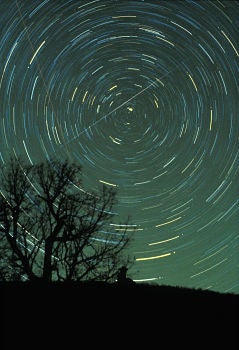
A Gemenid display. Credit: Jimmy Westlake/NASA
Some dazzling performances are worth missing bedtime for. Mark your calendars for upcoming meteor showers, and get the lawn chairs ready. Shooting stars鈥攖iny dust particles that typically break off of comets鈥攐ccur year-round and are visible across the United States, although clear air on cold nights enhances viewing. As autumn wanes, look for two showers in particular: The Leonids will pass through earth鈥檚 atmosphere November 7鈥�28, peaking between 2 a.m. and 3 a.m. on the 18th. The Geminids (possibly originating from an asteroid, and often the most prolific) follow on December 4鈥�16, with the big act expected after moonset on the morning of the 14th. Find a spot outside, away from urban light, and let your eyes adjust. Don鈥檛 focus on one place; meteor showers span much of the sky. Settle in for at least half an hour, and enjoy a show that鈥檚 been 4.5 billion years in the making. For more information on meteor shower-watching, see EarthSky's .
For more family-friendly activities from our November-December issue, click .
